
Emergency Water Damage Restoration Allentown PA
When indoor flooding threatens residential framing, fast moisture extraction stops water migration before rot takes hold. We deploy commercial water extractors and structural drying equipment across local neighborhoods to stabilize affected properties. Our technicians respond rapidly to eliminate standing water and protect building integrity.
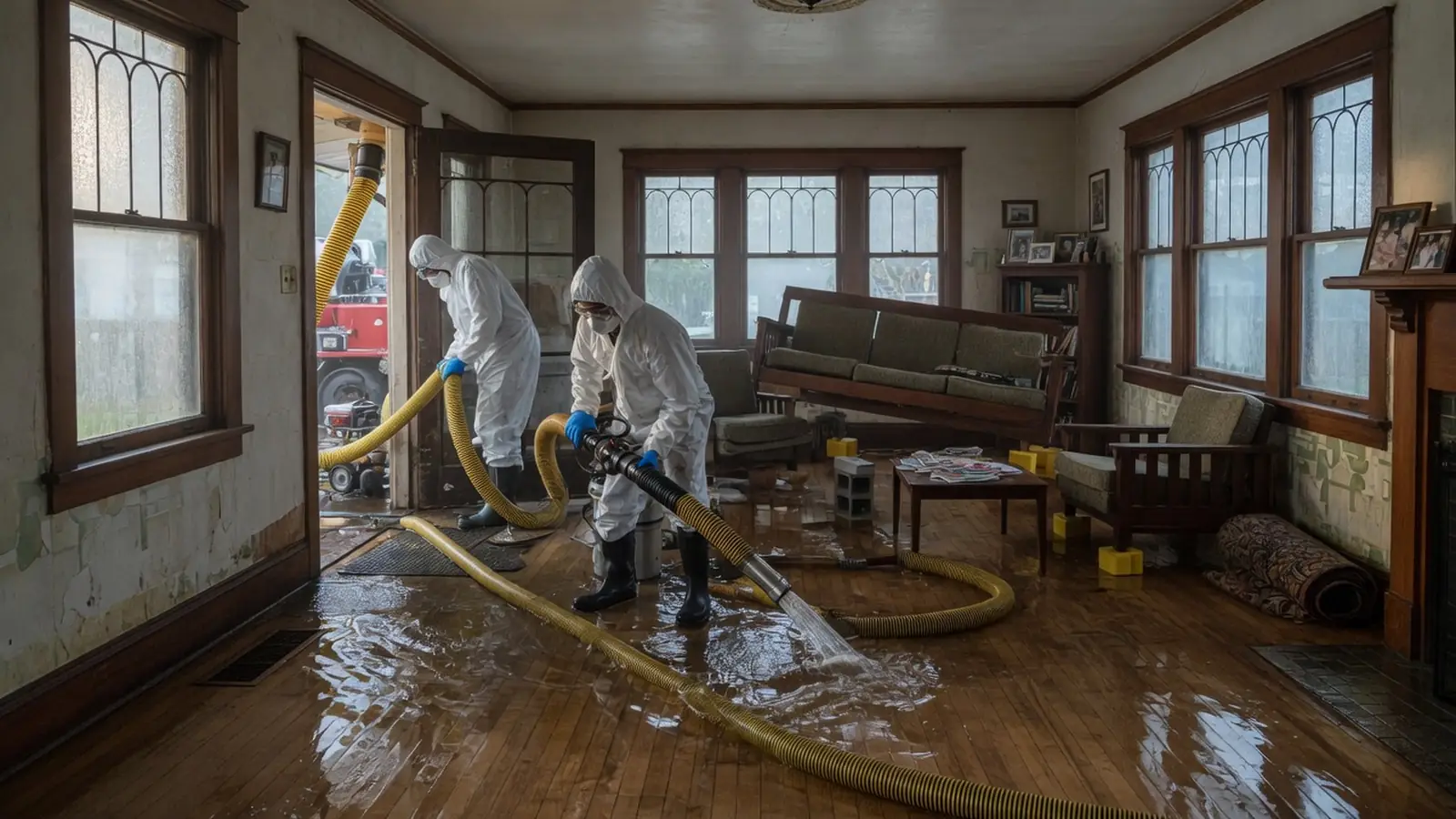
Dedicated Moisture Mitigation Specialists
Our technicians bring years of hands-on structural mitigation experience to neighborhoods from West End to Rittersville.
About 64% of housing units in our service territory (31,653 of 49,156) were built before 1960, the era of galvanized steel supply lines and cast iron drains prone to sudden failure.
About 11% of housing units in the local area (5,428 of 49,156) were built in the 1960s, overlapping the years aluminium branch wiring was installed.
About 15% of housing units locally (7,319 of 49,156) were built in the 1970s and 1980s, overlapping the years polybutylene supply piping was commonly installed, and you can learn how we handle frozen pipe emergencies when plumbing ruptures.
About 90% of housing units across our area (44,400 of 49,156) were built before 1980, the period when asbestos-containing materials and lead paint were still in use.
Homeowners often describe how freezing conditions cause overhead plumbing to burst and cascade water across multiple living levels, creating immediate structural and electrical hazards.
We monitor moisture levels daily with thermal cameras and penetrating pin probes until framing timbers reach stable equilibrium.
Every restoration project is managed with clear documentation so property owners understand each stage of structural drying.
Step-by-Step Structural Recovery
A pattern echoed in public discussions is that heavy rain increases groundwater hydrostatic pressure, forcing water up through cracks in concrete basement slabs and requiring sub-slab drainage remedies, so explore our comprehensive basement flooding solutions to see how we stabilize wet foundations.
- Emergency Moisture Assessment. Our technicians map water migration through floors and wall cavities using non-invasive thermal imaging and moisture meters. We determine the exact moisture perimeter before extraction begins.
- Rapid Water Extraction. Using commercial submersible pumps and weighted extraction tools, the crew removes standing liquid from carpets, subfloors, and structural framing. Removing bulk water early dramatically shortens dehumidification times.
- Industrial Dehumidification. We position low-grain refrigerant dehumidifiers and high-velocity axial air movers to pull moisture out of wall studs, subfloors, and drywall. Constant airflow accelerates evaporative drying across structural materials.
- Daily Moisture Verification. Technicians return daily to take psychrometric readings, measuring ambient humidity and wood moisture equivalent percentages. Equipment remains running until all assemblies reach baseline dry standards.
Disciplined Structural Drying
Our commitment centers on restoring structural framing to certified dry standards before any cosmetic repairs begin; review our certified mold remediation standards to understand how we prevent microbial growth. By verifying moisture thresholds with calibrated meters, we ensure framing and subfloors are completely dry.
Emergency Water Extraction
When sudden leaks inundate living spaces with standing water, risking rapid deterioration of surrounding drywall and flooring, immediate mitigation is vital. Our team deploys heavy-duty extraction units and sub-surface drying mats to eliminate puddles from hardwood, carpet, and concrete subfloors.
Storm And Roof Water Drying
NOAA radar recorded 746 hail signatures within about 15 miles of this region between 2021-2025 (2021: 145, 2022: 81, 2023: 366, 2024: 96, 2025: 58). The heaviest recent hail year around our service territory was 2023, with 366 radar hail signatures inside a 15-mile radius, causing roof penetrations and severe internal saturation. We extract trapped water from attics, ceilings, and exterior wall cavities to preserve structural framing.
Basement Slab Moisture Mitigation
The dominant mapped soils in this county area (PA077) by acreage are Urban land-Duffield complex, 0 to 8 percent slopes; Berks-Weikert complex, 3 to 8 percent slopes; Berks-Weikert complex, 8 to 15 percent slopes; Washington silt loam, 3 to 8 percent slopes. The single most extensive soil unit mapped around our region is Urban land-Duffield complex, 0 to 8 percent slopes, covering about 21,212 acres of PA077. Saturated soils transmit excessive hydrostatic pressure against basement slabs, demanding industrial pumping and rapid drying.
Our Commitment To Quality Restoration
We approach every water mitigation call with precision, deploying calibrated testing instruments and commercial drying equipment to protect property value and structural integrity.
- 16Zip Codes Served
- 6Service Areas
- 3Services Offered
Read real feedback from local property owners who trusted our specialists to mitigate severe moisture, dry framing assemblies, and salvage water-damaged structures.
“When an upstairs supply line rupture flooded our dining room ceiling, the crew arrived within forty minutes and extracted all the trapped water before joist rot started. I already told my brother across town to call them after seeing how cleanly they dried out our hardwood floors without warping. Their prompt structural moisture testing gave us complete peace of mind.”
Marcus B.
“During the subfloor drying in our hallway, the technicians detected hidden moisture migration spreading into the adjoining bathroom wall studs. The team immediately brought in extra injection drying mats and treated the framing with antimicrobial spray without altering our project timeline. They handled the entire complication transparently and kept our restoration moving forward smoothly.”
Elena R.
“We had a buyer home inspection scheduled in four days when our water heater split open and drenched the finished basement. The crew ran commercial desiccant units around the clock and documented dry moisture levels just hours before the inspector arrived. Everything passed with flying colors thanks to their relentless work.”
Derek S.
“A previous contractor removed wet baseboards but left soaked insulation sitting inside the drywall, which immediately created a pungent musty odor. This company stripped out the ruined materials, sanitized all the exposed studs, and positioned high-velocity air movers until the framing timber was bone dry. They salvaged what could have turned into an absolute mold catastrophe.”
Clara M.
Frequently Asked Questions
Should I attempt to thaw a suspected frozen pipe with a heat gun myself, or shut off the main water valve immediately to prevent a pressurized rupture?
Shut off the main water valve immediately rather than using an open heat gun to prevent a sudden pressurized rupture of the frozen pipe. Attempting rapid heat gun thawing creates thermal shock and pressurized expansion behind ice plugs, often triggering burst plumbing. Homeowners managing burst pipes from freezing temperatures face challenges navigating necessary structural drying, drywall demolition, and insurance claim approvals, so professional water mitigation should begin promptly.
How long does professional structural drying take after indoor flooding?
Complete structural drying typically takes three to five days depending on water saturation depth, airflow speed, and ambient indoor humidity. Dense hardwood flooring, double subfloors, and insulated wall assemblies may require specialty injection mats and commercial dehumidifiers to return wood framing to normal equilibrium.
Can wet drywall and carpet be dried in place or must they be removed?
Clean water exposures under twenty-four hours can often be dried in place, but contaminated water or sagging drywall requires immediate removal. Demolition of flood-damaged drywall and soaked carpet reveals active fungal growth on framing studs, requiring professional antimicrobial remediation before reconstruction can safely take place.
Why does groundwater seep up through concrete basement slabs during storms?
Heavy rain saturates surrounding soil and increases groundwater hydrostatic pressure, forcing water up through hairline floor cracks in slabs. Sub-slab drainage remedies like interior drain tile and sump pump systems relieve this subsurface water pressure and prevent recurring foundation inundation.
Why is hazardous material testing required before demolishing older wet walls?
Structures built before 1980 require testing because disturbing wet drywall or plaster can release dangerous asbestos fibers and toxic lead paint. About 90% of housing units across our area (44,400 of 49,156) were built before 1980, the period when asbestos-containing materials and lead paint were still in use, demanding strict safety containment.