
Allentown Basement Flooding
Groundwater and runoff can quickly overwhelm below-grade spaces during intense regional storms. Storm-driven grid outages disable primary sump pumps, resulting in rapid basement flooding and concerns regarding emergency water extraction and battery backups. Our certified technicians respond immediately to extract standing water, stabilize indoor humidity, and protect structural foundations.
Call (610) 555-0160 when it's safe to go downstairs.
Prefer to talk? (610) 555-0160
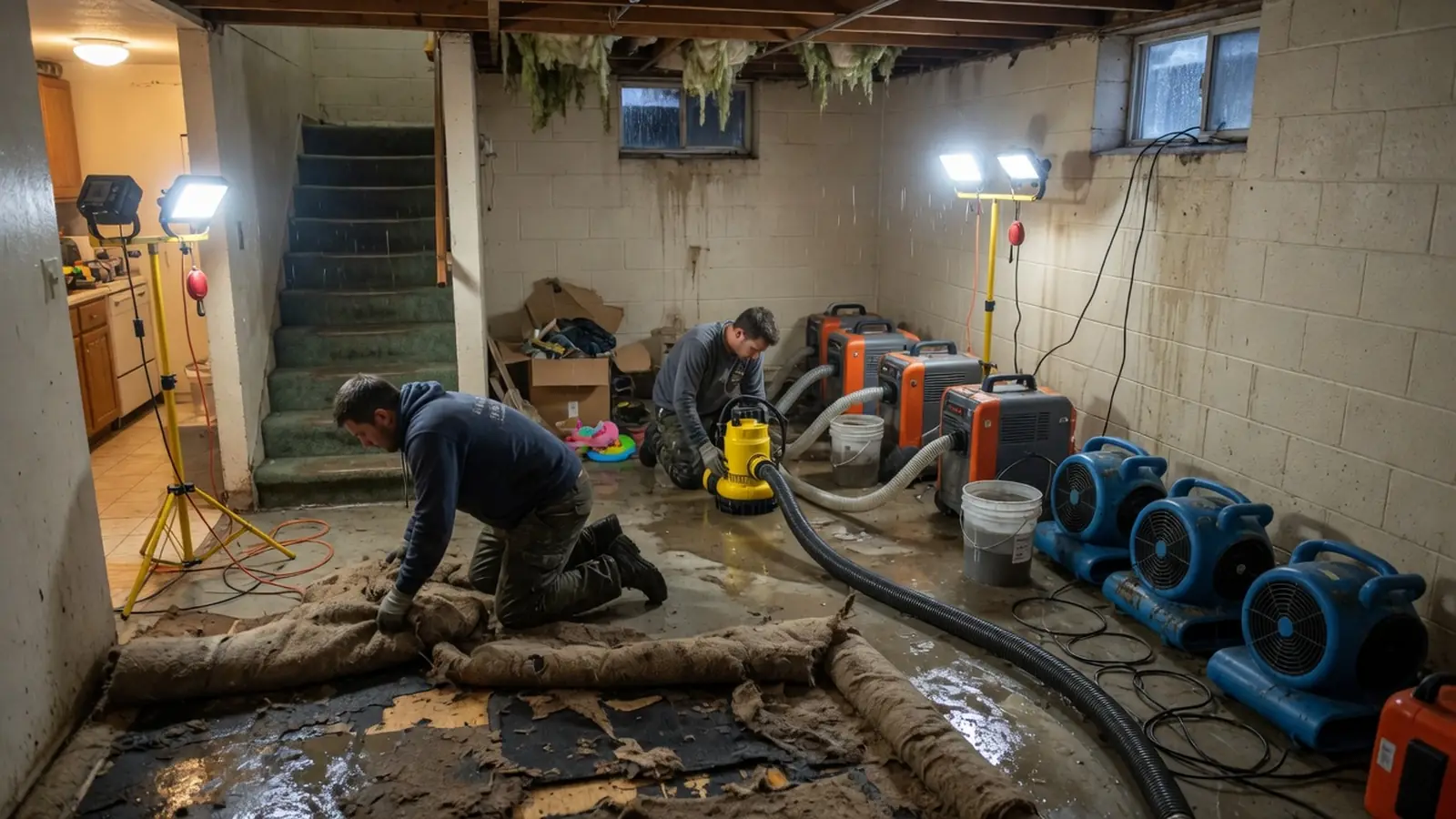
Rapid Basement Flood Recovery Across The Valley
Old stone foundations and modern concrete slabs throughout Lehigh County face intense hydrostatic pressure whenever heavy weather rolls through the region.
Water intrusion saturates carpeting and baseboards in finished basements, raising concerns about whether residential dehumidifiers can prevent hidden mold growth.
Homeowners often describe the distress of watching below-grade rooms fill with runoff after severe storms knock out neighborhood power.
When unexpected water threatens your foundation, you can immediately dispatch certified emergency water extraction crews to begin moisture mapping and structural salvage.
Our technicians use commercial submersible pumps, thermal imaging cameras, and weighted extraction tools to pull water from deep subfloor layers before permanent damage sets in.
Our Four-Stage Basement Flooding Response
A pattern echoed in public discussions is that municipal or main line sewer backups flood basements with hazardous black water, necessitating emergency biohazard extraction and lower drywall removal. We apply rigorous clinical protocols to neutralize biological hazards and completely dry affected structural assemblies.
- Emergency Water Pumping And Containment. Sub-zero winter conditions and subsequent snowmelts lead to burst pipes concealed behind drywall, ceiling ice dam leaks, and basement water intrusion. Our crews rapidly place high-capacity extraction pumps and set up containment zones to halt water migration.
- Structural Strip-Out And Salvage. We remove saturated baseboards, wet carpet padding, and porous materials to expose hidden framing cavities. To learn how we prevent cross-contamination during winter structural leaks, read our guide on resolving frozen pipes and hidden cavity leaks.
- Antimicrobial Treatment And Remediation. Demolition of flood-damaged drywall and soaked carpet reveals active fungal growth on framing studs, requiring professional antimicrobial remediation before reconstruction. We apply botanical disinfectants directly to exposed wall framing to neutralize microbial reservoirs.
- Industrial Dehumidification And Verification. High-velocity air movers and low-grain refrigerant dehumidifiers run continuously until moisture meters verify baseline dry standards. You can also explore our complete mold remediation procedures for residential properties to ensure long-term air quality.
Dedicated Moisture Elimination And Cleanliness
Mopping standing floodwater without industrial dehumidification equipment leaves trapped structural moisture that develops into visible mold along wall cavities. We commit to thorough psychrometric monitoring on every project, verifying that deep structural moisture is fully removed before signing off. Our technicians maintain clean containment barriers, protect unaffected living spaces, and treat every property with careful respect.
Foundation Slab Seepage Control
Heavy rain increases groundwater hydrostatic pressure, forcing water up through cracks in concrete basement slabs and requiring sub-slab drainage remedies. We extract pooled surface water and help identify structural slab entry points to keep subterranean spaces dry.
Biohazard Drain And Sewer Extraction
When municipal sewer lines surcharge into basement drains, our technicians deploy specialized biohazard sanitation gear. We safely extract contaminated wastewater, remove affected wall sections, and sterilize subfloors with hospital-grade antimicrobial solutions.
Structural Cavity Drying
Water trapped behind finished basement paneling and sill plates causes rot if left untreated. We position commercial desiccant dehumidifiers and directional air injectors to thoroughly dry hidden framing assemblies without unnecessary demolition.
Committed To Thorough Flood Restoration
Every basement flooding event demands methodical moisture extraction, precise instrumentation, and disciplined sanitation practices to safeguard your property.
- 12Zip Codes Served
- 6Service Areas
- 3Services Offered
Read real feedback from local property owners who called our team to handle sudden basement water emergencies and structural drying.
“When groundwater filled our lower floor, the crew managed every local disposal permit and environmental compliance document right away. They made sure our municipal backflow paperwork was completed accurately before wrapping up. That saved us a massive headache during our follow-up municipal inspection.”
Marcus V.
“Our primary sump failed late on a Sunday night right as heavy storms rolled through. The team answered our call immediately and arrived with extraction pumps within the hour to stop water from reaching our finished rooms. Having someone pick up the phone at midnight made all the difference.”
Elena K.
“I watched closely as their technicians removed the ruined sheetrock, and they cut perfectly level, clean two-foot flood cuts along every stud. Even the perimeter plastic seals around the drying chamber were taped with precision. You can tell they take immense pride in leaving framing clean and ready for drywallers.”
Devin B.
“After seeing how fast they stabilized our soaked subfloor and prevented mildew, I already passed their contact info to my brother down the road. His basement flooded during the same storm, and they treated his house with that exact same urgency. I will recommend them to anyone dealing with indoor water intrusion.”
Hannah T.
Frequently Asked Questions
How quickly should water extraction begin after a basement floods?
Emergency water extraction should start within twenty-four to forty-eight hours to halt structural deterioration and avoid pervasive fungal growth. Immediate pumping eliminates hydrostatic head pressure, protects foundation footing joints, and keeps porous building materials salvageable.
Why are containment chambers and commercial dehumidifiers necessary?
Containment barriers and industrial desiccant units isolate airborne spores and rapidly pull bound water out from deep structural wall cavities. Homeowners facing ceiling leaks into basement areas question the necessity and cost of professional containment chambers and commercial drying equipment. Without controlled containment and industrial airflow, moisture travels upward into subflooring and framing, multiplying overall restoration costs.
Can residential dehumidifiers dry a flooded basement?
Standard household dehumidifiers lack the airflow volume and water removal capacity needed to dry soaked subflooring and structural wall framing. Commercial restoration requires low-grain refrigerant systems capable of extracting tens of gallons daily while keeping ambient relative humidity below fifty percent.
Does homeowner insurance cover basement flooding from groundwater?
Standard homeowners insurance policies typically exclude subterranean groundwater seepage unless a dedicated flood or sump endorsement is active. We provide comprehensive moisture logs and photographic documentation to assist your adjuster in evaluating covered water damage components.
How long does the structural drying process take?
Thorough structural drying typically requires between three and five days of continuous commercial dehumidification and directed heat airflow. Technicians monitor moisture levels daily using non-penetrating meters, removing equipment only once materials reach dry baseline equilibrium.