
Allentown Mold Remediation
Water intrusion saturates carpeting and baseboards in finished basements, raising concerns about whether residential dehumidifiers can prevent hidden mold growth. Our certified remediation specialists isolate active spore colonies, remove ruined drywall, and extract structural moisture under negative HEPA filtration. We restore healthy indoor air quality quickly with transparent communication at every step.
Ring (610) 555-0160 and we'll come take a look.
Prefer to talk? (610) 555-0160
Dedicated Remediation Specialists
There are 49,156 housing units on record in the Census ACS 5-year estimates across our community, where aging foundations frequently trap damp subterranean air.
About 90% of housing units locally (44,400 of 49,156) were built before 1980, the period when asbestos-containing materials and lead paint were still in use.
With the median owner-occupied home built in 1950 according to Census ACS 5-year estimates, aging framing requires careful moisture evaluation.
About 6% of housing units locally (3,044 of 49,156) were built since 2000, so a substantial share of the local stock is still on its original systems.
When severe storms compromise property envelopes, relying on comprehensive emergency water damage restoration stops moisture before colonies expand.
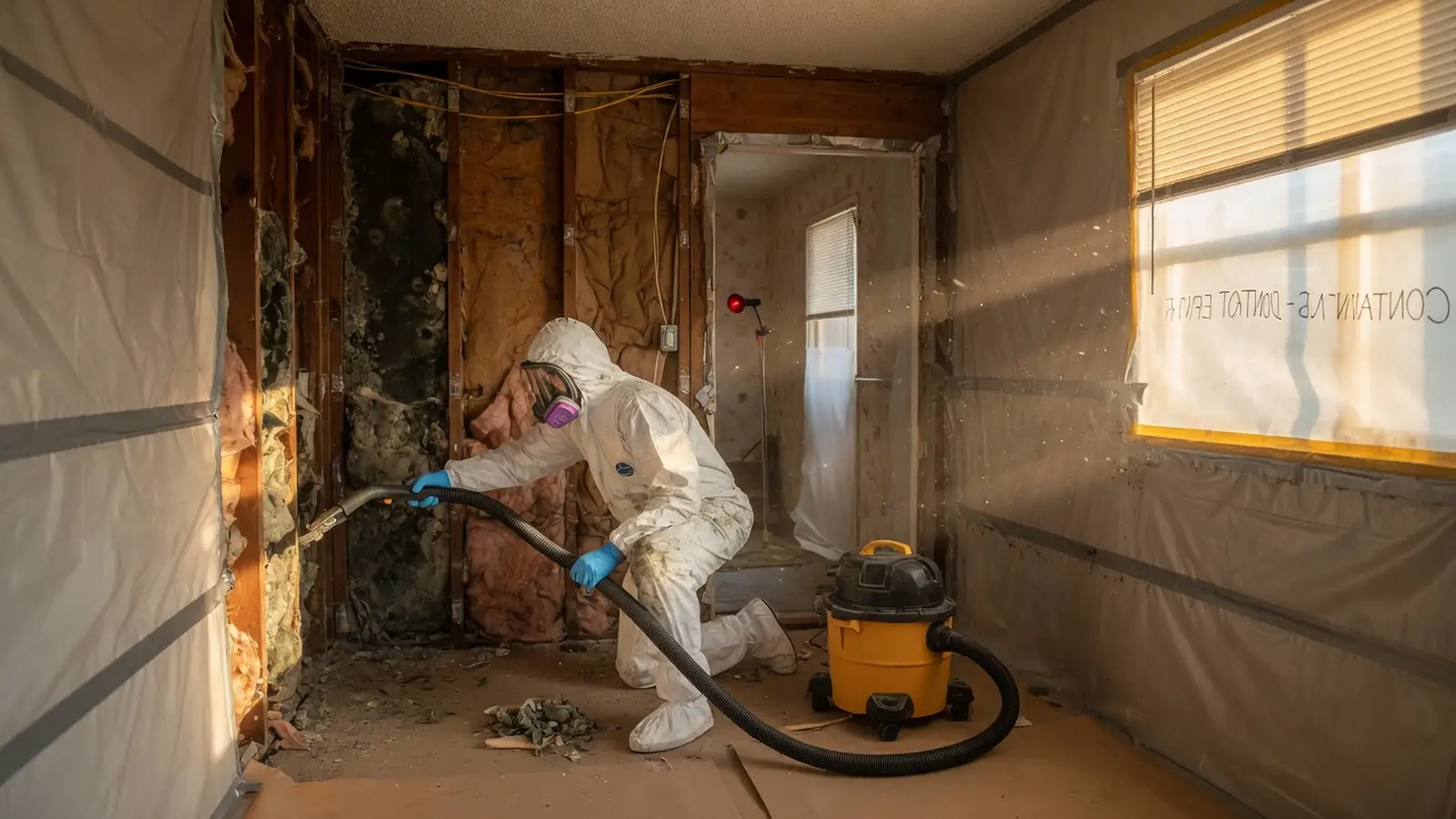
Our technicians erect true negative-pressure HEPA containment zones before disturbing any contaminated drywall or subflooring.
A pattern echoed in public discussions is that mopping standing floodwater without industrial dehumidification equipment leaves trapped structural moisture that develops into visible mold along wall cavities.
We combine calibrated thermal imaging with botanical antimicrobials to ensure framing timbers pass rigorous post-remediation clearance standards.
How We Safely Remove Mold Contamination
Our multi-stage approach tackles biological contamination at the source, especially when mitigating chronic basement flooding issues across older foundations.
- Thermal Moisture Mapping And Containment. Homeowners often observe that consumer fans and shop vacuums fail because water wicks deep into subfloors and wall cavities, requiring thermal imaging and commercial dehumidifiers to avoid rot.
- Controlled Demolition And Spore Extraction. Demolition of flood-damaged drywall and soaked carpet reveals active fungal growth on framing studs, requiring professional antimicrobial remediation before reconstruction.
- Antimicrobial Treatment And HEPA Vacuuming. Technicians scrub framing timbers with EPA-registered botanical antimicrobials and perform multi-pass HEPA vacuuming to capture settling micro-spores.
- Structural Dehumidification And Clearance. High-capacity low-grain refrigerant dehumidifiers extract embedded moisture from sill plates and studs until sub-surface readings reach dry standard baselines.
Our Workmanship Commitment
We adhere strictly to IICRC S520 remediation standards on every residential project. If winter weather causes pipe breaks, addressing moisture from frozen pipes immediately prevents widespread fungal growth behind finished walls. Our certified specialists never cut corners or mask odors, ensuring deep structural drying that protects long-term building durability.
Basement Mold Remediation
Finished lower levels with stone or block foundations face constant hydrostatic pressure. We isolate affected wall assemblies, strip contaminated insulation, and remediate stud framing to eliminate fungal colonies.
Attic And Roof Cavity Remediation
Poor roof ventilation and condensation allow microbial growth across roof sheathing and rafters. Our crew uses dry-ice blasting or antimicrobial wash systems under controlled containment to restore attic framing.
Crawlspace Encapsulation And Drying
Unsealed dirt floors draw heavy ground moisture into floor joists and subflooring. We remove moldy materials, treat exposed wood timbers, and install heavy vapor barriers paired with dedicated dehumidification.
Our Commitment To Property Health
We approach every microbial contamination project with scientific precision, utilizing industry-standard containment, advanced moisture meters, and hospital-grade air scrubbers to guarantee safe indoor environments for local families.
- 10Zip Codes Served
- 6Service Areas
- 3Services Offered
Local property owners rely on our certified specialists when indoor moisture leads to fungal contamination. Here is direct feedback from residents describing our containment, remediation, and transparent communication.
“After discovering dark patches along our basement baseboards, the crew set up containment zones and cleared the air within forty-eight hours. I already gave their contact information to my next-door neighbor who had similar moisture problems following heavy spring rains. Finding technicians who treat your property with genuine care is rare.”
Marcus T.
“A previous handyman simply sprayed bleach over our damp laundry room wall and left the framing wet underneath. This team stripped away the ruined sheetrock, treated the active fungal growth on the studs, and brought in commercial dehumidifiers to dry everything properly. They completely solved what the first person botched.”
Elena R.
“Every single line item on the estimate was explained to me before any equipment entered our home. The final invoice matched the written quote down to the penny with zero surprise charges or hidden disposal fees. That level of financial transparency gave my family real peace of mind.”
David K.
“During three days of structural drying in our cellar, the technicians swept up every scrap of debris and sealed off all dust plastic before clocking out. We never had to navigate stray cords or hazardous materials when returning home from work. Their respect for our living space was outstanding throughout the project.”
Brenda S.
Frequently Asked Questions
How long does professional mold remediation typically take?
Professional mold remediation generally takes between two to five days depending on the structural moisture depth and the affected square footage. Mopping standing floodwater without industrial dehumidification equipment leaves trapped structural moisture that develops into visible mold along wall cavities, prolonging drying cycles.
Can standard residential dehumidifiers stop mold after water intrusion?
Residential dehumidifiers lack the air volume capacity to draw deep moisture out of saturated framing studs and wall cavities after flooding. Water intrusion saturates carpeting and baseboards in finished basements, raising concerns about whether residential dehumidifiers can prevent hidden mold growth without commercial extraction.
How do older regional homes affect remediation protocols?
Properties constructed before 1980 require specialized containment to prevent releasing legacy asbestos fibers or lead paint dust during demolition. About 90% of housing units in our local area (44,400 of 49,156) were built before 1980, the period when asbestos-containing materials and lead paint were still in use, while the median owner-occupied home locally was built in 1950 (Census ACS 5-year).
Must drywall and carpet always be removed after sewage or floodwater contamination?
Contaminated porous materials saturated by sewage or ground floodwater cannot be sanitized safely and require immediate controlled removal. Category 3 black water from outdoor flooding or sewage mandates the complete tear-out and disposal of porous materials like drywall, carpet, and insulation to eliminate severe pathogens.
Can reconstruction begin immediately once flood-damaged materials are removed?
Rebuilding can only begin after underlying wood framing is sanitized, treated with antimicrobial agents, and dried below safe moisture thresholds. Demolition of flood-damaged drywall and soaked carpet reveals active fungal growth on framing studs, requiring professional antimicrobial remediation before reconstruction.