
Allentown Frozen Pipes
Freezing conditions cause overhead plumbing to burst and cascade water across multiple living levels, creating immediate structural and electrical hazards. A pattern echoed in trade discussions notes that cold-climate freeze-thaw cycles exert extreme mechanical stress on residential plumbing, creating sudden ruptures capable of releasing hundreds of gallons indoors. Our technicians arrive equipped for immediate thermal imaging, water extraction, and structural stabilization.
Call (610) 555-0160 once the storm has passed.
Prefer to talk? (610) 555-0160
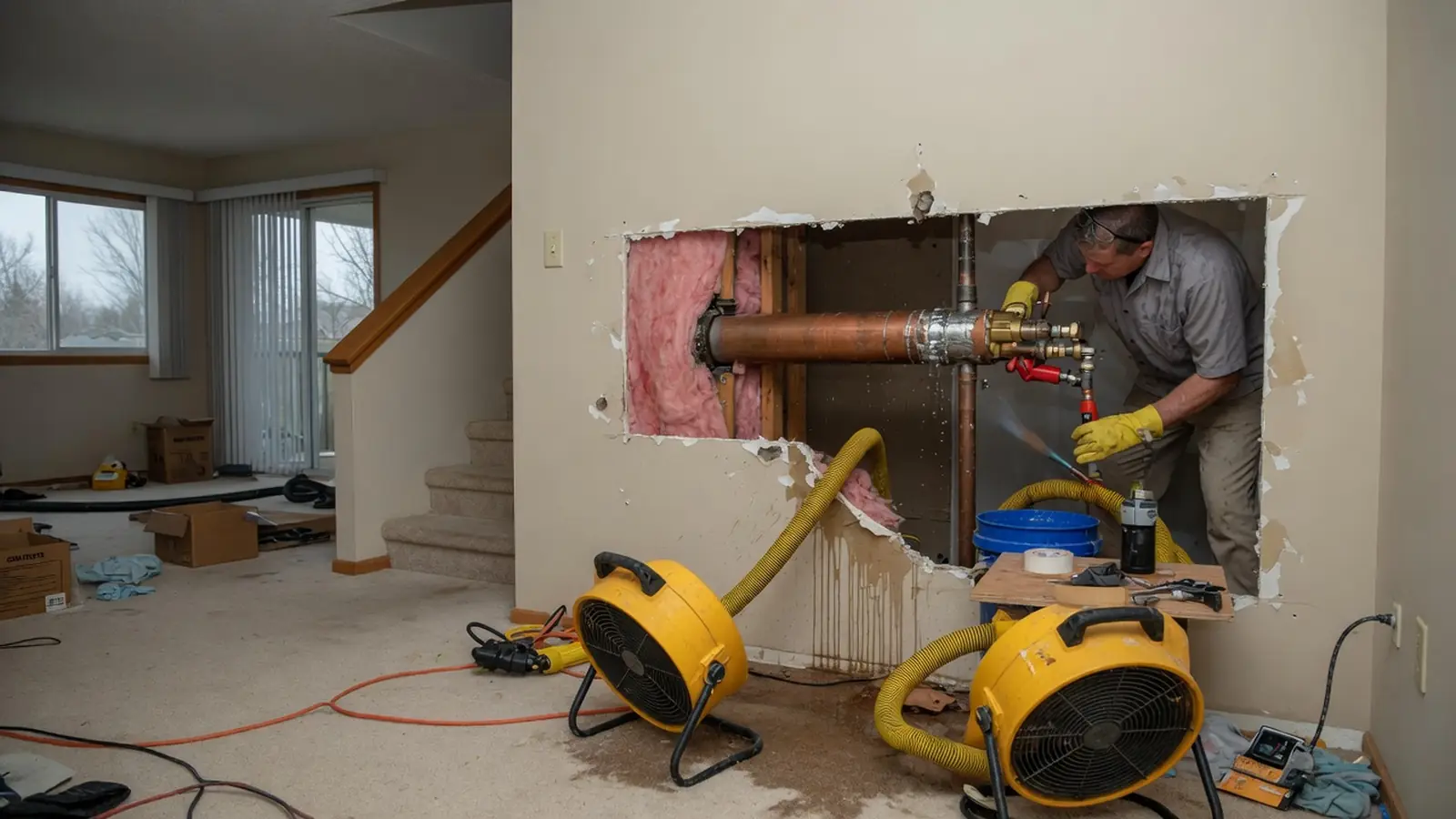
Proven Winter Water Damage Mitigation
Our crews provide comprehensive emergency water damage restoration across regional properties facing severe freeze emergencies.
The median owner-occupied home locally was built in 1950 (Census ACS 5-year), presenting distinct architectural layouts that require specialized moisture extraction.
With 49,156 housing units on record in the Census ACS 5-year estimates, our technicians frequently manage freeze failures in vintage architectural designs.
About 6% of housing units in the area (3,044 of 49,156) were built since 2000, so a substantial share of the local stock is still on its original systems.
About 64% of housing units locally (31,653 of 49,156) were built before 1960, the era of galvanized steel supply lines and cast iron drains.
During a recent cold snap in the historic West End district, our team mapped moisture spreading through four finished rooms using infrared thermal imaging before cutting targeted inspection openings.
We prioritize preserving original framing and historical trims through controlled structural dehumidification whenever sound drying parameters can be maintained.
Rapid Freeze Damage Mitigation Process
Homeowners managing burst pipes from freezing temperatures face challenges navigating necessary structural drying, drywall demolition, and insurance claim approvals. As practitioners frequently emphasize, shutting off the main water valve immediately stops active flooding, but occupants must strictly avoid submerged electrical outlets before crews arrive to mitigate severe basement flooding from ruptured pipes.
- Emergency Shutoff & Hazard Assessment. Unheated crawlspaces and uninsulated rim joists in older area homes leave supply lines exposed to freezing when winter temperatures dip below twenty degrees Fahrenheit. We isolate active breaks, verify electrical safety, and deploy pumps immediately.
- Water Extraction & Moisture Mapping. Sub-zero winter conditions and subsequent snowmelts lead to burst pipes concealed behind drywall, ceiling ice dam leaks, and basement water intrusion. Our technicians use thermal cameras and high-volume extractors to remove standing water and reveal hidden moisture pockets.
- Targeted Demolition & Drying Setup. We open affected wall cavities, remove saturated insulation, and position commercial air movers alongside industrial LGR dehumidifiers to establish balanced evaporation rates.
- Structural Monitoring & Insurance Verification. We take daily psychrometric moisture readings to verify complete structural drying and compile detailed digital documentation to accelerate carrier claim approvals.
Direct Accountability And Technical Rigor
Water intrusion saturates carpeting and baseboards in finished basements, raising concerns about whether residential dehumidifiers can prevent hidden mold growth. We adhere strictly to IICRC S500 standards for professional water damage mitigation, utilizing calibrated commercial drying equipment rather than consumer units. If microbial hazards emerge, our certified specialists execute professional mold remediation protocols to ensure healthy indoor air quality. We never declare a structure dry until moisture meter readings match dry standard baselines.
Frozen Pipe Thawing & Repair
We locate hidden freeze points along exterior walls and crawlspaces, utilizing safe warming equipment to thaw lines and repair ruptured pipe segments without open flames.
Ceiling & Cavity Water Extraction
When overhead pipes rupture, water cascades into insulated floor cavities and drywall ceilings. We extract standing pools and create precision drying access to prevent sagging.
Finished Basement Drying
Water following gravity saturates subfloors, carpet padding, and trim. We extract moisture deeply, salvage structural framing, and dehumidify below-grade living spaces.
Our Standards For Winter Water Extraction
When freezing temperatures cause sudden plumbing ruptures, rapid response and thorough psychrometric tracking prevent permanent structural compromise. We measure humidity and material moisture content daily until your home returns to safe dry baseline conditions.
- 14Zip Codes Served
- 8Service Areas
- 3Services Offered
Read genuine experiences from local property owners who faced sudden winter pipe bursts and trusted our technicians to protect their homes.
“When an overhead supply line froze and burst near our upstairs bath, water started pooling right above my elderly mother's ground-floor bedroom. The crew arrived within forty minutes, set up safe containment walkways so her wheelchair path stayed clear, and kept our two nervous rescue dogs calm while running the extractors. They treated our family with immense dignity during a frightening morning.”
Arthur M.
“A brutal ice storm knocked down power lines on our road right as our burst pipe flooded the finished basement. Even with hazardous driving conditions and zero grid power, the team brought mobile generators, hooked up commercial extraction units, and worked straight through the night to catch up on the dryout timeline. Their fast pivot saved our subfloors from buckling.”
Clara D.
“Living in a connected twin home, I was terrified that water from our ruptured copper line would seep through the party wall and trigger an HOA dispute. The crew walked next door immediately, placed protective exterior exhaust silencers on the dehumidifier discharge hoses, and explained the containment barriers to our neighbors with complete transparency. They completely defused a tense situation before any shared damage occurred.”
Julian K.
“Three months after our exterior wall pipe split during a severe cold snap, our home feels completely back to normal with zero musty odors. Their moisture readings were incredibly thorough, and the structural lumber dried out perfectly without warping our hardwood floors. The crew did the job right the first time, and our insurance adjuster approved the documentation without a single issue.”
Brenda S.
Frequently Asked Questions
How quickly should water extraction begin after a pipe bursts from freezing?
Professional water extraction should begin within 24 to 48 hours to prevent irreversible structural weakening and dangerous mold colonization. Prompt emergency extraction stops water from migrating deeper into framing, floorboards, and lower living levels. Rapid intervention also satisfies insurance policy requirements to take immediate action mitigating secondary losses.
How long does it take to completely dry a home damaged by burst pipes?
Complete structural drying typically takes three to five days depending on building materials, ambient humidity, and the extent of water spread. Dense materials such as lath, plaster, and subfloors require continuous commercial air movement and dehumidification. Daily psychrometric moisture checks confirm when moisture levels match pre-loss dry baseline standards.
Does homeowner insurance cover water damage caused by frozen pipes?
Most standard policies cover sudden and accidental burst pipe water damage if the property owner maintained adequate heat inside the building. Carriers require documented proof of mitigation and maintenance. Our technicians compile detailed moisture mapping, thermal imaging logs, and itemized structural drying records to assist your insurance adjuster throughout the claim.
What is the estimated cost range for burst pipe water damage restoration?
Total restoration costs depend on the volume of standing water, the number of affected rooms, and required demolition rather than fixed flat rates. Each freeze failure involves unique structural variables. We perform an on-site thermal assessment to identify affected cavities and provide transparent line-item estimates aligned with industry-standard insurance pricing guidelines.
Can residential dehumidifiers handle drying out a finished basement after a pipe burst?
Standard residential dehumidifiers lack the air volume and grain depression required to dry structural wall cavities and saturated carpeting. Household units only remove superficial room humidity while moisture remains trapped behind baseboards and sill plates. Professional restoration employs low-grain refrigerant dehumidifiers and high-velocity air movers to prevent hidden mold growth.